
Quartz vs Granite Countertops: Which One Is Right for Your Kitchen in 2026?
Quartz is the better choice for most kitchens in 2026 because it never needs sealing, resists stains, and offers consistent patterns including marble looks, at $50 to $120 per square foot installed. Granite wins on heat resistance, outdoor use, and entry price, at $40 to $100 per square foot, roughly $10 to $20 less than comparable quartz. For a typical 30 square foot kitchen the total difference is $300 to $600, so the decision usually comes down to how you cook and the look you want, not the budget.
What Each Material Actually Is?
The names cause half the confusion, so start here. Granite is a 100 percent natural stone, an igneous rock cut from quarried slabs. Every slab is one of a kind, with color and veining set by where it formed. Quartz countertops, despite the natural-sounding name, are an engineered product: roughly 90 to 93 percent ground natural quartz bound with resin and pigments in a factory.
That single difference in origin explains almost every practical difference between them. The resin in quartz is what makes it nonporous and stain-proof, and it is also what makes it vulnerable to high heat and direct sunlight. The all-mineral makeup of granite is what makes it heat-proof and UV-stable, and also what makes it porous enough to need sealing.
Quartz vs Granite: Side-by-Side Comparison
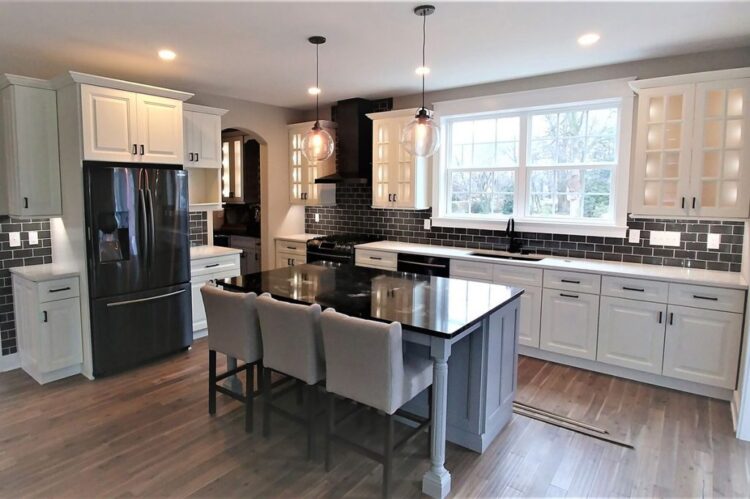
Here is the full comparison on the factors that decide real projects:
| Factor | Quartz | Granite |
|---|---|---|
| What it is | Engineered: about 90 to 93 percent ground quartz plus resin. | 100 percent natural quarried stone. |
| 2026 installed cost | $50 to $120 per sq ft. | $40 to $100 per sq ft; exotic slabs $200+. |
| Sealing | Never needed. | Needed; modern sealers can last 15+ years. |
| Stain resistance | Excellent, nonporous. | Good when sealed; can stain if seal wears. |
| Heat resistance | Limited; hot pans can scorch or crack the resin. | Excellent; handles hot cookware. |
| UV and outdoor use | Can fade or cloud in direct sun. | UV-stable; the outdoor kitchen choice. |
| Appearance | Consistent, controlled; convincing marble looks. | Unique natural slabs; no two alike. |
| Seams | Less visible. | More visible, quality fabrication helps. |
| Repairs | Shop work required. | Chips easier to repair on site. |
| Resale | Most requested by 2026 homebuyers. | Strong, classic buyer appeal. |
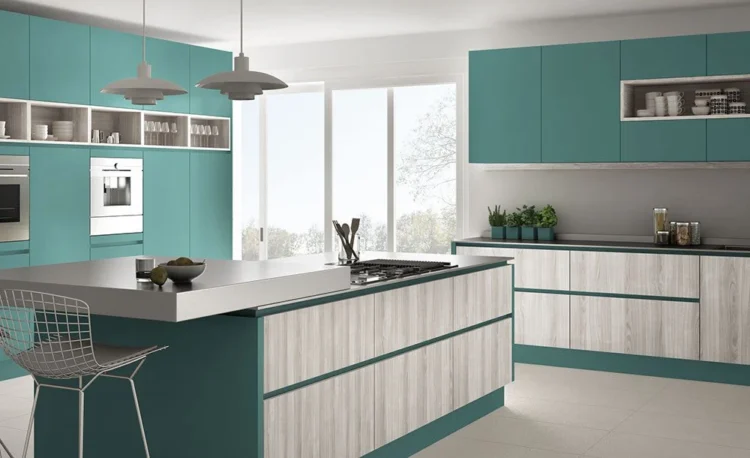
What Do Quartz and Granite Cost in 2026?
The honest cost answer is that the two materials overlap heavily. In 2026, granite installs for $40 to $100 per square foot and quartz for $50 to $120, so granite averages about $10 to $20 less per square foot at every quality tier. On a typical 30 square foot kitchen that gap works out to $300 to $600 total, which matters, but rarely decides the project. The exception is exotic granite: rare slabs can pass $200 per square foot and cost more than premium quartz.
The numbers that surprise homeowners are the extras, and they apply to both materials. Sink and cooktop cutouts run $150 to $300 each. Removing old countertops adds $200 to $500. Upgraded edges like ogee or waterfall add $20 to $50 per linear foot. A matching 4-inch backsplash adds $20 to $45 per linear foot. When you compare quotes, confirm each one includes cutouts, removal, templating, and edge work, because a quote missing those items is not the cheaper quote.
For budgeting, a complete mid-range kitchen countertop project of 30 to 50 square feet lands between $3,500 and $6,500 installed in 2026, in either material. New Jersey labor sits above the national midpoint, so expect the upper half of these ranges locally.
Heat, Stains, and Daily Durability: The Real Differences
Heat is granite’s clearest win. You can set a hot pan directly on granite without a second thought. Quartz cannot make that promise: sustained high heat can discolor or crack the resin binder, so quartz kitchens live with trivets by the range. If you cook heavily with cast iron and sheet pans, this is a genuine daily-life difference, not a spec-sheet detail.
Stains are quartz’s clearest win. Because the surface is nonporous, wine, oil, coffee, and turmeric wipe off without soaking in, and there is no sealer to maintain. Granite is porous: when the seal is fresh it performs well, but a worn seal lets oils and pigments in. The old advice to reseal granite every year is outdated, since modern sealers applied at installation can last 15 years or more, but it is still one more thing to track that quartz owners never think about.
On impact, both are hard enough for a lifetime of normal use. Quartz’s resin gives it slight flexibility, so it chips less during use and fabrication, while a chipped granite edge is easier to repair in place. One more location rule worth knowing: if the countertop will sit in strong direct sunlight, a south-facing window run or an outdoor kitchen, choose granite. Quartz resins can cloud and fade under UV, and an unevenly sunlit quartz counter can discolor in patches.
Looks: One of a Kind vs Exactly What You Ordered
Granite gives you a slab that exists nowhere else. The movement, the mineral flecks, and the color shifts are formed by geology, and for many homeowners that natural character is the whole point. The tradeoff is unpredictability: the small sample in the store can look noticeably different from the full slab, which is why granite buyers should always approve their exact slab before fabrication.
Quartz gives you control. The pattern you approve is the pattern you get, seams blend better, and the marble-look whites with soft gray veining that dominate 2026 kitchens are quartz’s home territory, delivering the Calacatta look without marble’s staining and etching problems. If your design plan depends on a precise color match with cabinets and backsplash, quartz’s consistency is a real advantage.
Style direction matters too. The warm neutral and green cabinet palettes leading 2026 pair naturally with soft-veined white and cream quartz. Granite’s stronger patterns suit kitchens where the counter is meant to be the statement piece.
So Which Should You Choose?
Choose quartz if you want the lowest-maintenance surface, a light marble-look or precise color match, better stain protection for a busy family kitchen, and the material most requested by homebuyers in 2026. This is why quartz has become the default for most indoor kitchen remodels.
Choose granite if you cook hot and heavy and want to set pans down anywhere, want a natural one-of-a-kind slab, are building an outdoor kitchen or a sun-flooded space, or want the lowest entry price on a stone surface.
There is no wrong answer between them on quality or lifespan. Both, properly installed, outlast the kitchen around them.
Pick the Countertop and Cabinets Together, Not Separately
The most common countertop regret has nothing to do with quartz versus granite. It comes from choosing the counter in one store and the cabinets in another, then finding out the undertones fight each other under kitchen lighting. A warm white quartz against a cool white cabinet reads as dingy. A busy granite over a patterned two-tone kitchen reads as noise.
The fix is to make it one decision. HM Designs Howell carries quartz countertop lines alongside 13 cabinet brands at 1581 US Highway 9, Howell Township, NJ 07731, which means you can hold countertop samples directly against full-size cabinet doors under the same light before anything is ordered. The showroom serves Howell, Freehold, Marlboro, Manalapan, Monroe, and surrounding Central New Jersey, with financing available through Synchrony Bank. Call +1 732 889 6526 or book an appointment to plan the counter and cabinets as one kitchen.
Still Torn Between Quartz and Granite?
A 3-inch sample cannot settle this decision. Veining shifts across a full slab, and the same quartz reads completely different next to white cabinets than it does next to green or wood tones. The only reliable test is holding real samples against the actual cabinet doors going into your kitchen.
👉 Compare Quartz and Cabinet Combinations Free at HM Designs Howell and get a straight answer for how you cook, plus one itemized quote covering counters and cabinets together, with cutouts, edges, and removal already included. No surprise line items later.
Frequently Asked Questions
Is quartz or granite cheaper in 2026?
Granite is slightly cheaper on average: $40 to $100 per square foot installed versus $50 to $120 for quartz, a gap of about $10 to $20 per square foot at comparable quality. On a typical 30 square foot kitchen that is a $300 to $600 total difference. Rare exotic granite is the exception and can exceed $200 per square foot.
Can you put hot pans on quartz countertops?
No, not directly. The resin that binds quartz can scorch, discolor, or crack under sustained high heat, so quartz kitchens should use trivets or hot pads near the range. Granite handles hot cookware directly, which is its biggest practical advantage for homeowners who cook heavily.
Does granite really need to be sealed every year?
Not anymore. Annual sealing was the old standard, but modern penetrating sealers applied at installation can protect granite for 15 years or more. A simple test: if water stops beading on the surface and starts soaking in, it is time to reseal. Quartz never needs sealing at any point.
Which is better for resale value, quartz or granite?
Quartz currently has the edge. It is the most requested countertop material among homebuyers in 2026, and its clean marble-look patterns match the styles buyers expect in updated kitchens. Granite still signals quality and appeals to buyers who prefer natural stone, so neither hurts a sale; quartz simply matches current demand more closely.
Which lasts longer, quartz or granite?
Both last the lifetime of the home when properly installed and supported. Granite resists heat and sunlight better over decades; quartz resists stains and chips better in daily use. Longevity should not be the deciding factor between them, since either outlasts the cabinets and appliances around it.
Where can I compare quartz countertops with cabinets in New Jersey?
HM Designs Howell displays quartz countertop options alongside 13 cabinet brands at 1581 US Highway 9, Howell Township, NJ 07731, serving Howell, Freehold, Marlboro, Manalapan, and Monroe. You can match countertop samples against full-size cabinet doors under showroom light in one visit. Call +1 732 889 6526 to book an appointment.